Android vs iPhone—this debate is like Coke vs Pepsi or Batman vs Superman. Everyone has an opinion, and no one backs down easily. If you’re planning to buy a new smartphone, chances are you’re stuck right here, wondering: Which one is actually better?
The truth is simple yet complicated. There’s no single winner. It all depends on you. Your habits, your budget, your expectations. Let’s break it all down in plain English so you can decide confidently.
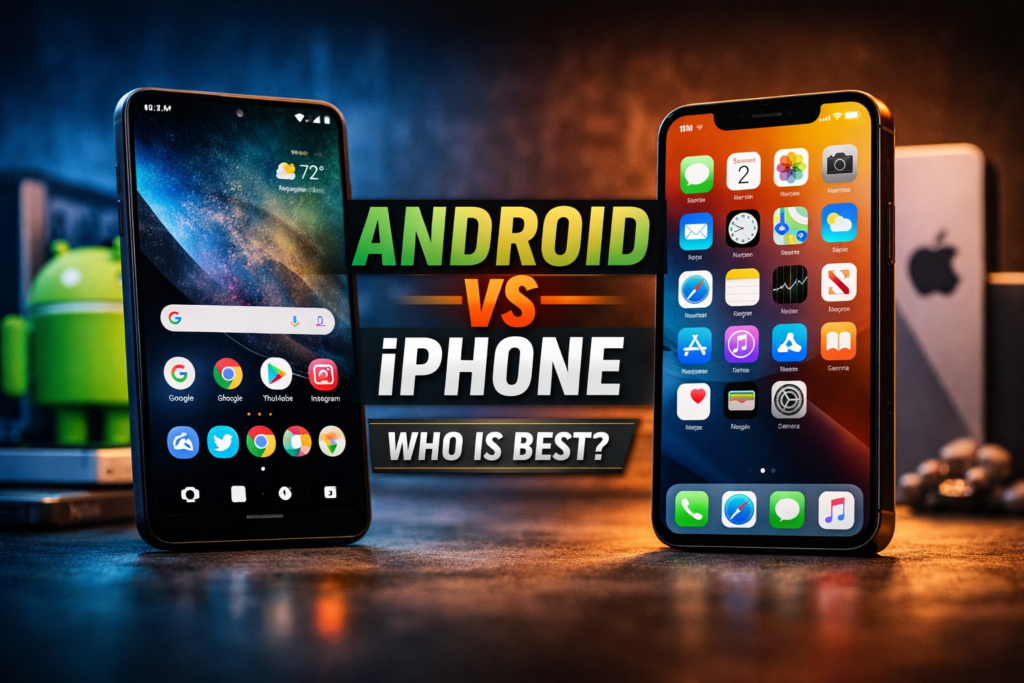
Understanding Android and iPhone Ecosystems
What Is Android?
Android is an open-source operating system developed by Google. It powers phones from brands like Samsung, Xiaomi, OnePlus, Oppo, Vivo, Motorola, and many more. Think of Android as a huge marketplace—lots of choices, lots of styles, and something for every pocket.
From budget phones to ultra-premium flagships, Android covers the full spectrum.
What Is iPhone (iOS)?
iPhone runs on iOS, Apple’s closed ecosystem designed exclusively for Apple devices. Apple controls everything—hardware, software, updates, and even accessories. It’s like living in a luxury apartment complex where everything just works together flawlessly.
Design and Build Quality
Android Design Variety
Android phones are like a fashion runway—foldables, punch-hole cameras, curved screens, flat screens, plastic backs, glass backs, vegan leather—you name it. You get options. Tons of them.
Whether you want a gaming phone, a slim device, or a rugged phone, Android has it.
iPhone’s Premium Design Philosophy
Apple sticks to a clean, premium design language. Every iPhone feels solid, polished, and expensive. There’s no experimentation overload—just refined evolution.
If you love minimalism and elegance, iPhone nails it every time.
User Interface and Ease of Use
Android Customization Power
Android lets you own your phone. Change launchers, icons, themes, fonts, widgets—everything bends to your will. It’s like decorating your own house.
Power users love Android because it doesn’t lock them in.
iOS Simplicity and Consistency
iOS is designed for simplicity. Everything is smooth, predictable, and beginner-friendly. You don’t need to tweak settings endlessly—it just works out of the box.
For users who value ease over control, iOS feels like home.
Performance and Speed
Android Processors and RAM Advantage
Android phones often pack higher RAM and powerful processors from Qualcomm, MediaTek, or Samsung. On paper, Android looks unbeatable.
Multitasking, split-screen, background apps—Android handles them like a champ.
Apple Silicon and Optimization
Apple’s A-series chips are monsters. Even with less RAM, iPhones outperform many Android phones thanks to tight hardware-software integration.
It’s like a well-trained athlete beating bulkier competitors with pure efficiency.
Camera Comparison
Android Camera Innovation
Android brands push camera innovation aggressively—200MP sensors, periscope zoom, AI features, night modes, and pro controls.
If you love tweaking camera settings, Android is your playground.
iPhone Camera Consistency
iPhones deliver reliable, natural-looking photos and industry-leading video quality. You don’t need to fiddle with settings—just point and shoot.
Content creators especially love iPhones for video recording.
Battery Life and Charging
Android Fast Charging and Battery Sizes
Android phones dominate in battery size and charging speed. 5000mAh batteries, 65W–120W fast charging, wireless and reverse charging—it’s all here.
You can go from 0 to 100 faster than brewing coffee.
iPhone Battery Optimization
iPhones focus on efficiency rather than big batteries. While charging is slower, battery optimization ensures stable day-long performance.
Not flashy, but dependable.
Software Updates and Longevity
Android Update Challenges
Android updates depend on manufacturers. Some brands are fast, others… not so much. Mid-range phones often get fewer updates.
That’s the price of diversity.
iPhone’s Long-Term Support
Apple is unmatched here. iPhones receive updates for 5–6 years, sometimes more. Your phone ages gracefully, like fine wine.
App Store and Ecosystem
Google Play Store Flexibility
Android allows third-party apps, APK installs, and customization freedom. Developers experiment more freely here.
Great for advanced users.
Apple App Store Quality Control
Apple’s App Store focuses on security and quality. Apps are better optimized and more polished.
Less freedom, more reliability.
Security and Privacy
Android Security Features
Android offers strong security tools and Google Play Protect, but openness can be a double-edged sword.
Safe—if you know what you’re doing.
iPhone Privacy Focus
Apple markets privacy as a core feature. App tracking transparency, encrypted data, and strict permissions make iPhones a privacy fortress.
Price and Value for Money
Android for Every Budget
From ₹7,000 phones to ₹1,50,000 flagships—Android wins on value. You always get options.
Perfect for budget-conscious buyers.
iPhone as a Premium Investment
iPhones are expensive, no doubt. But resale value, longevity, and ecosystem balance the cost.
You pay more upfront, but it lasts longer.
Customization and Personalization
Android Freedom
Android is like clay—you mold it your way. From lock screens to automation, the possibilities are endless.
iPhone’s Controlled Experience
iPhone customization has improved, but it’s still limited. Apple prefers control over chaos.
Gaming and Entertainment
Android Gaming Capabilities
High refresh rates, gaming modes, and cooling systems give Android gamers an edge.
iPhone Gaming Performance
iPhones deliver consistent FPS and better game optimization. Less heat, smoother gameplay.
Who Should Buy Android?
- Budget-conscious users
- Tech enthusiasts
- Customization lovers
- Fast charging fans
Who Should Buy iPhone?
- Long-term users
- Content creators
- Privacy-focused users
- Apple ecosystem fans
Final Verdict: Android vs iPhone – Who Is Best?
There’s no universal winner. Android wins on freedom, variety, and value, while iPhone wins on performance consistency, longevity, and ecosystem polish.
The best phone isn’t the most popular one—it’s the one that fits your life.
Conclusion
Android and iPhone are two different philosophies. One gives you freedom, the other gives you finesse. Choosing between them isn’t about specs—it’s about personality.